Along Sweden’s rugged coastlines and sprawling lakes, the Swedish Sea Rescue Society stands ready day and night all year. Its 2,500 volunteers operate from 73 stations, forming a lifeline funded by memberships and donations. For 120 years, volunteers have answered the call while balancing day jobs, school runs, and half-eaten dinners.
On a weekday in June in the archipelago west of Gothenburg, daylight lingers, stretching into a gentle endless glow.
Granite rocks surround white cottages. Boathouses in rusty red and pale-yellow tiptoe toward the water. All is calm and familiar, yet farther out, a lone boat drifts.
Information comes in fragments: someone may have fallen overboard, and the reported position is changing.
Within minutes, Sweden’s Joint Rescue Coordination Centre begins organising the response.
A volunteer boat from the Sea Rescue Society (Sjöräddningssällskapet) is sent out. The organisation is nearly 120 years old and handles around 90 per cent of all sea rescues in Sweden. It receives no government funding.
Instead, the organisation depends on donations, volunteers, and support from over 146,000 members.
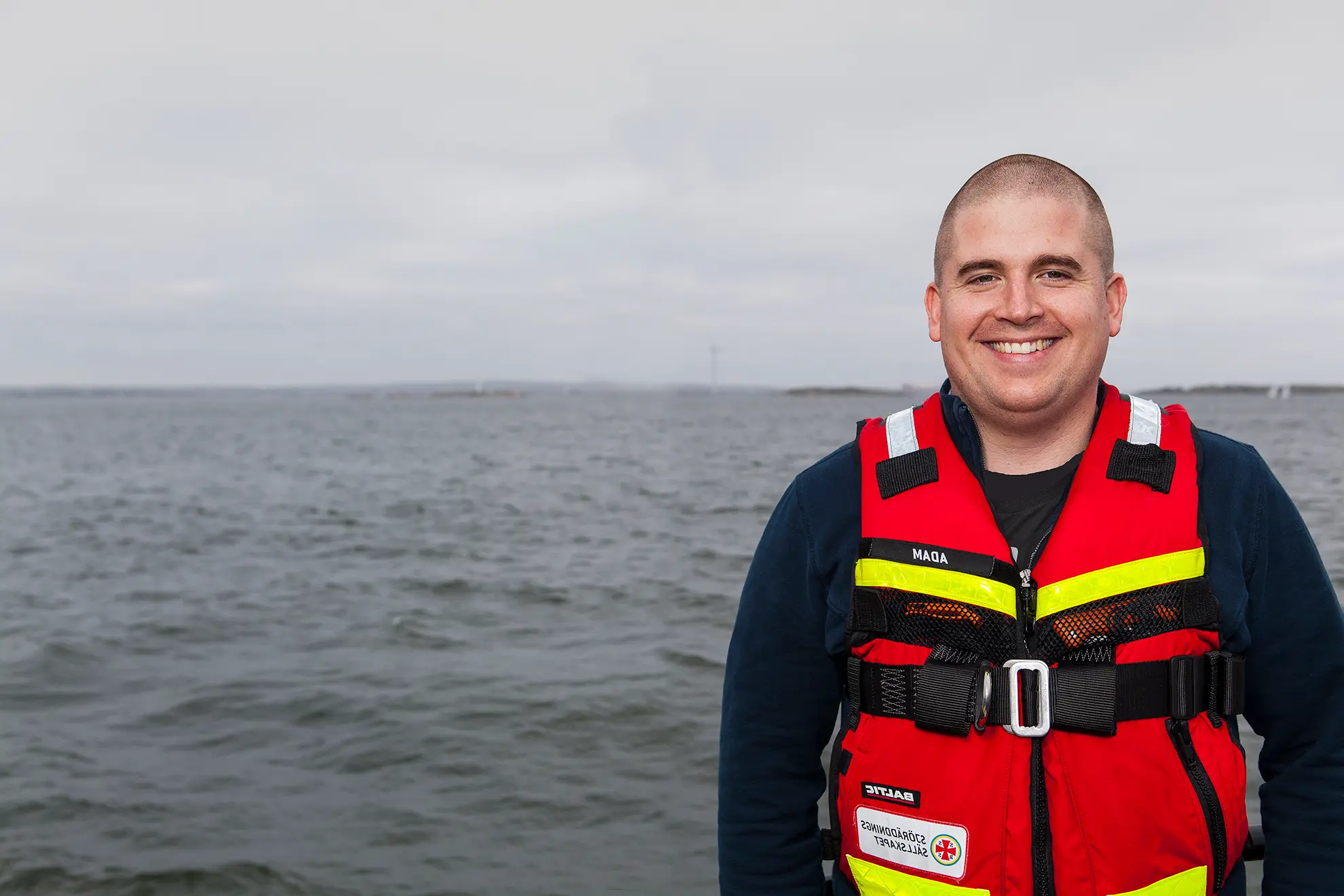
“We are a bit unusual,” says Adam Goll, maritime leader at the Sea Rescue Society. “We do what many people would expect a public authority to do.”
They respond to emergencies at sea, rescue people in distress, assist vessels in trouble, and support medical transports and other rescue operations along Sweden’s coasts, lakes and islands. Their presence provides a vital safety net for everyone spending time on the water.
“You can compare our work to roadside assistance for cars,” says Adam Goll. “But at sea, you cannot step out of the car and stand safely by the road. In such a dynamic environment, even simple problems can worsen if help does not arrive quickly.”
Goll’s journey with the organisation began in 2003. For years, he volunteered in his spare time while working as a professional master mariner on larger ships.
In 2019, Goll began working full-time for the Sea Rescue Society, coordinating groups involved in maritime emergencies, such as healthcare providers, the Swedish Maritime Administration, and local rescue services.
Today, he leads operations. His department manages boats, volunteers, training, and maintenance to make sure they are ready when an alarm comes in.
Goll points out that most problems on leisure boats happen because of delayed maintenance, such as a clogged filter, an old hose or a stalled engine.
“Most of these incidents are preventable. Just lifting the engine cover once and seeing how things work gives enough basic knowledge to solve the problem yourself,” he says.
When asked which operations are most important but often overlooked, Goll cites two examples. The first involves helping families who encounter trouble on the water, often in situations that aren’t life-threatening but can still be overwhelming for those involved.
“It is not a lot of action, but it is incredibly important for the people who get help in that moment. You live on others’ gratitude and the feeling that you’ve done a good job.”
The second example is more serious: crews are sometimes sent to assist individuals who do not want to be rescued.
“These operations are often traumatic,” Goll says. “You are fighting for someone who does not want to live, and you have to make sure that person survives.”
Now, Goll is more concerned with small commercial vessels, such as small passenger boats and fishing boats.
In these businesses, the owner, captain, and crew are often the same person.
“Limited budgets make decisions difficult,” he explains. “Should you buy the trawl winch for next season’s income or invest in a fire alarm system?”
Since the 2017–18 regulatory changes, responsibility for safety checks on small commercial vessels has shifted to the operators. On paper, the system expects structured safety work. But along some docks, reality looks rather different.
Goll recalls a fire aboard a fishing vessel in which he assisted with the rescue. The boat had no fire alarm, no bilge alarm, only one escape route, one life raft, and no buoyancy aid.
“For me, that is a typical example of where we have missed the target in systematic safety work at sea,” Goll says.
On the Sea Rescue Society’s own boats, safety systems are as fundamental as the hull itself, built to endure the kind of weather that sends most back to harbour.
Consilium, a world leader in intelligent safety technology, has provided smoke and fire detectors for the Sea Rescue Society’s boats for many years. Goll notes these devices have been part of the fleet since he started.
“They are a trusted partner,” he says. “If something is wrong, they fix it. And the products are of good quality.”
This is important because the environment is harsh. The Sea Rescue Society’s boats are built to withstand up to 6.5 g, a force Goll compares to flying a fighter jet.
“We place high demands on equipment staying in place and lasting over time,” he says. “The boats often operate in harsh conditions and face significant external stress.”
When designing new rescue boats, the Sea Rescue Society made a rule: any equipment that couldn’t integrate into the existing control and monitoring system was excluded.
Consilium’s fire detectors connect directly to the boat’s main control system, sparing the crew from juggling extra panels or alarm indicators.
Goll sees this as part of a bigger change in fire safety. Older systems only gave a detector number, so crews had to search for the source. Newer systems show exactly where smoke or heat is and how the situation is developing.
On the Sea Rescue Society’s boats, the principle has been taken even further. The alarms no longer just beep. They speak.
“It might say: fire in the engine room,” Goll says. “That matters when you are bouncing around in a rescue boat. You should not have to hear a beep, look at a display, read it and start investigating. A voice tells you what is wrong.”
Goll circles back to the organisation’s local roots. Each rescue station has its own leaders, but the driving force is always the same: people want to help in the places they call home.
“What keeps it going is people’s care for their local community. Volunteers want their neighbours, friends, and visitors to be safe,” he says.
When he moved to Kalmar to train as a master mariner, he joined the local station. Volunteering made new friendships, connections, and a strong sense of belonging.
For Goll, this is the heart of the organisation’s success: rescue stations do not just serve their communities, they help build them.
“Teenagers work alongside volunteers in their seventies, from diverse backgrounds and professions. You quickly become part of the local community,” he says.
Entry requirements are straightforward: you must be able to swim 200 metres and be fit enough for the work.
After that, training, drills and team spirit carry much of the load. The work is technical, but it is also deeply personal. Volunteers leave dinners, family plans and quiet evenings at home because someone else’s day has suddenly taken a turn.
This, in turn, shapes how Sea Rescue Society talks about onboard safety. Rather than lecturing people, they rely on storytelling people sharing in their own words.
“The lesson travels within the tale. When people talk openly about their own incidents, the impact is different. You are not standing there pointing fingers,” he says.
The pointed finger, he admits, still has its place.
“Perhaps that is a habit I carry from my years as a master mariner,” he says, chuckling. “Sometimes I think people benefit from being told clearly. Then they sharpen up a bit.”
Apart from wearing a life jacket, his strongest advice is to make sure you can alert someone yourself, so that someone will always come.
“There are many ways to do that: a mobile phone, a VHF radio, a PLB (Personal locator beacon) or a small satellite messenger. The exact device matters less than the basic idea,” he says.
“Just promise me you’ve got at least one button you can press when things start going wrong.”
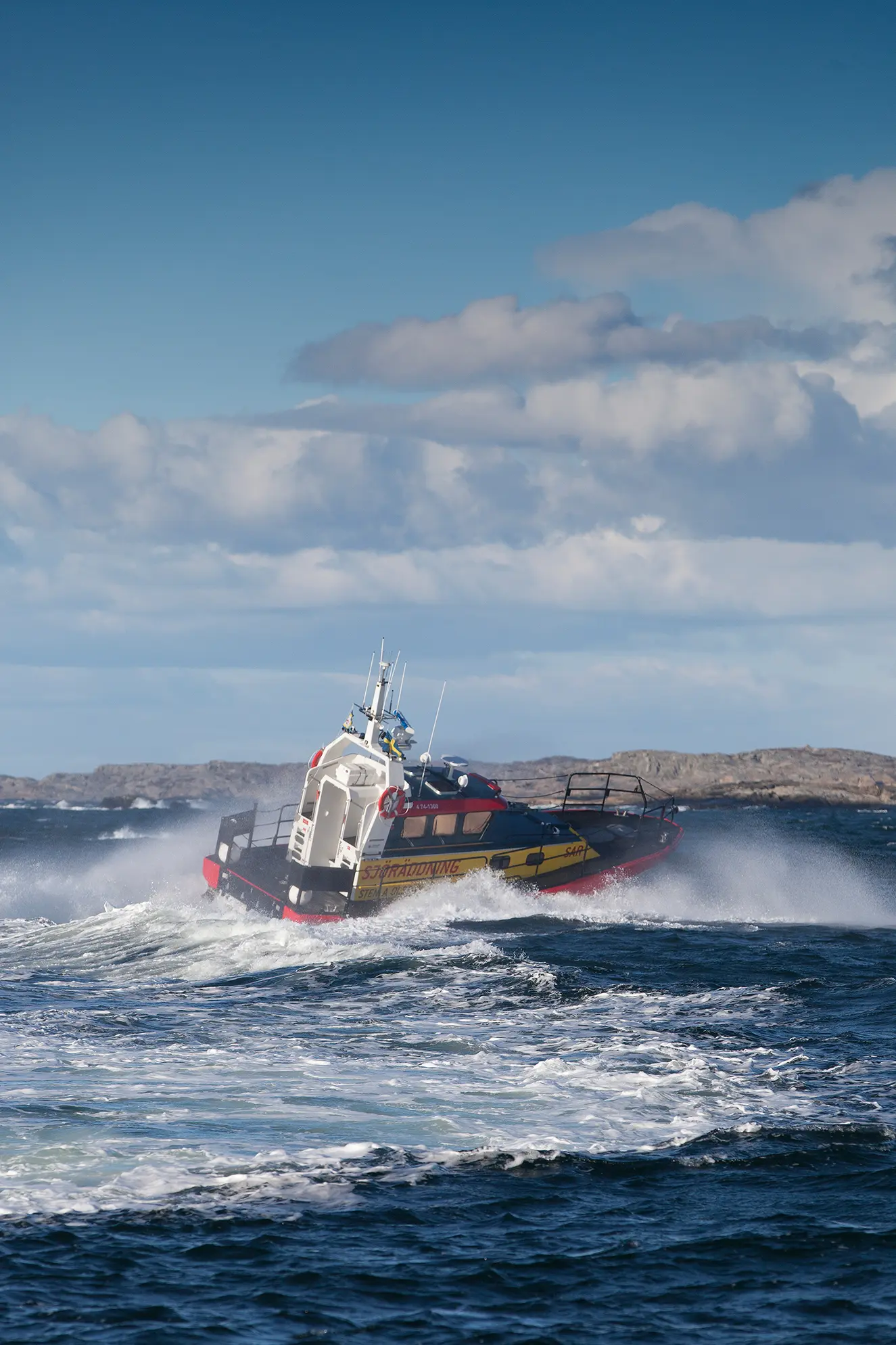
Image: Mats Ryde, Sjöräddningssällskapet
Latest news
News archive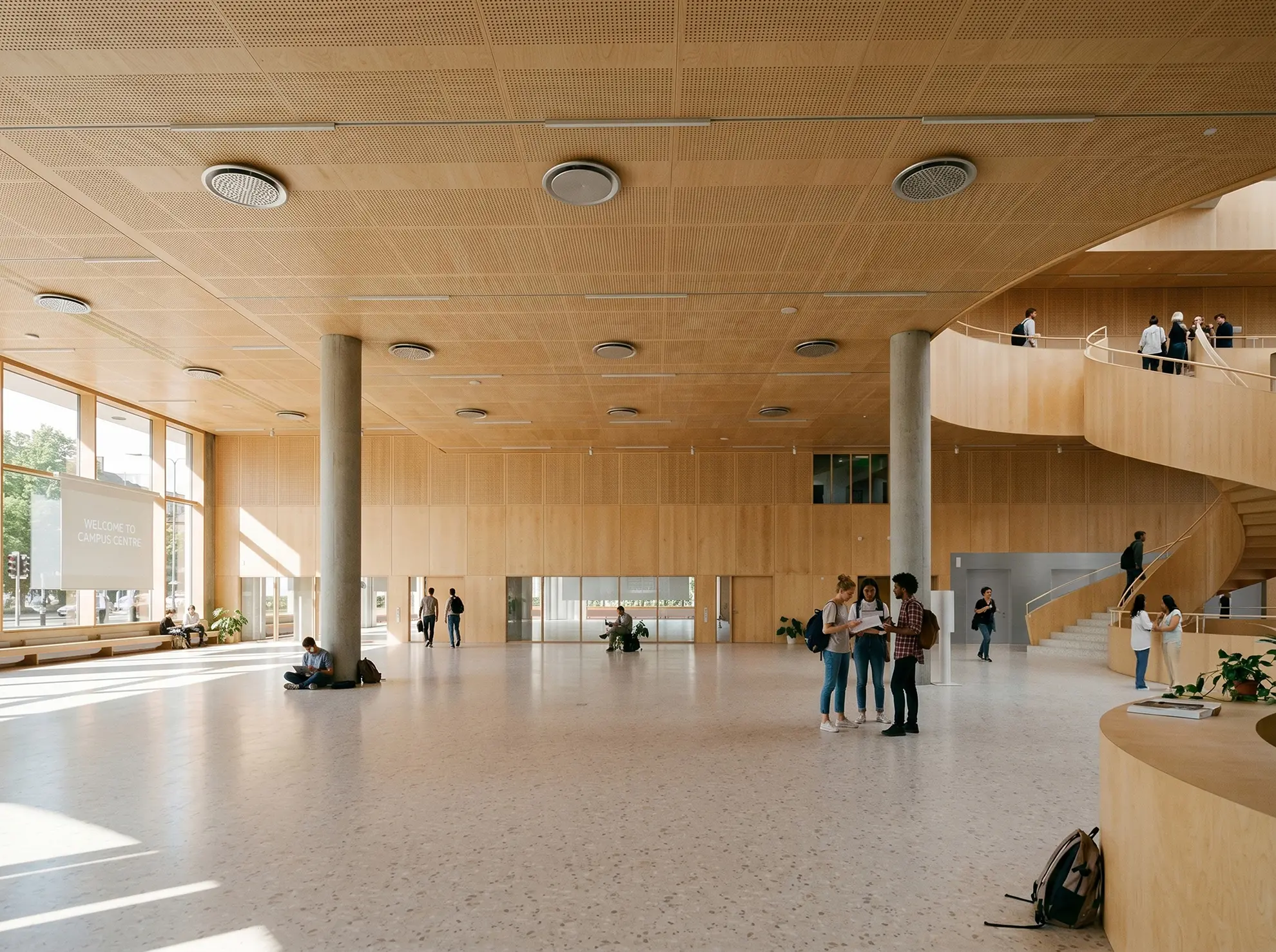
Consilium strengthens security at Malmö University’s new building with a seamlessly integrated safety system
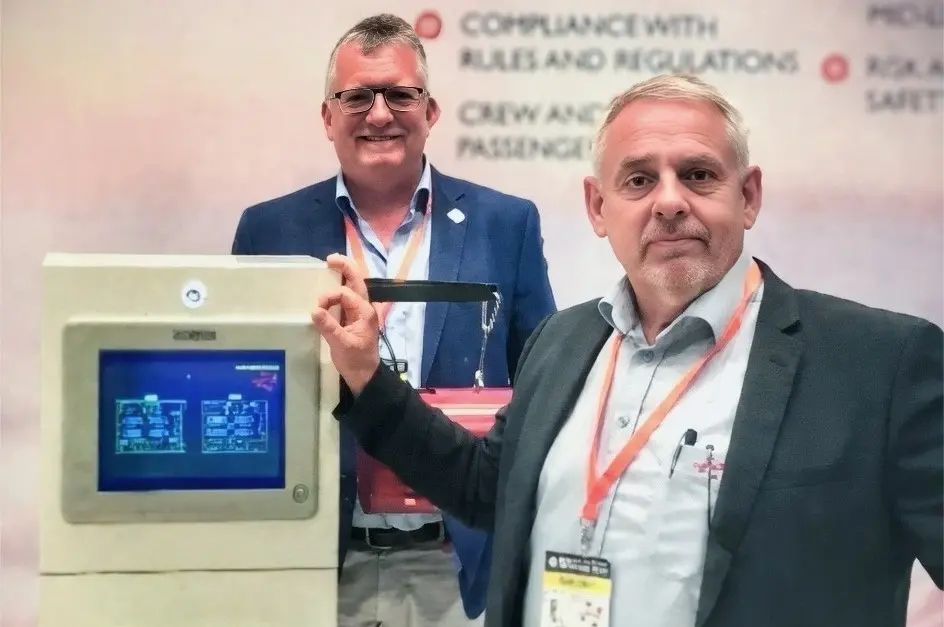
Daspos: The Danish duo who taught ships to spot trouble in the air