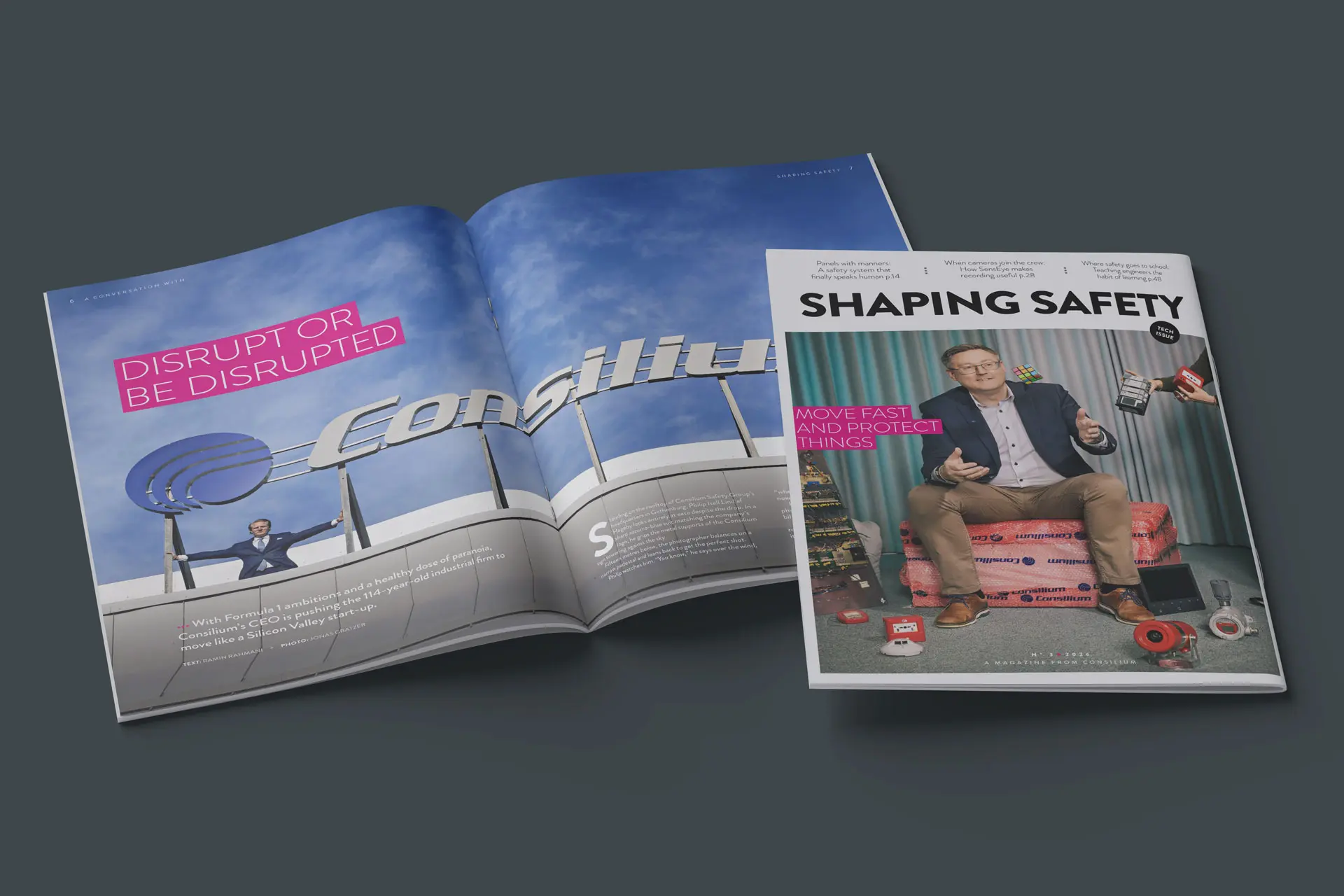
Emerging technologies cut both ways. They open possibilities and create safety risks. Ships now transport electric vehicles and stay connected across oceans. Owners choose greener fuels, and buildings are becoming increasingly complex. Innovation is how we answer those risks.
This issue brings together thinkers and doers working at the intersection of new risks, new technologies, and old assumptions. We look at safety panels designed around how people think under pressure, AI cameras that scan live video to spot problems early, and wireless detectors that use a ship’s steel structure to send signals.
Philip Isell Lind af Hageby makes the case for challenging an industry that tends to be cautious. Henrik Gjörloff takes us on a train ride to show why train safety depends as much on human behavior as on technology. We also examine how to close support gaps, where one fault can involve ten people, three time zones, and a fax machine.
We take a closer look at voice evacuation systems and how they guide people during emergencies instead of just alerting them. And we meet students preparing to become tomorrow’s safety engineers.
Together, these stories treat disruption as the careful work of improving safety.