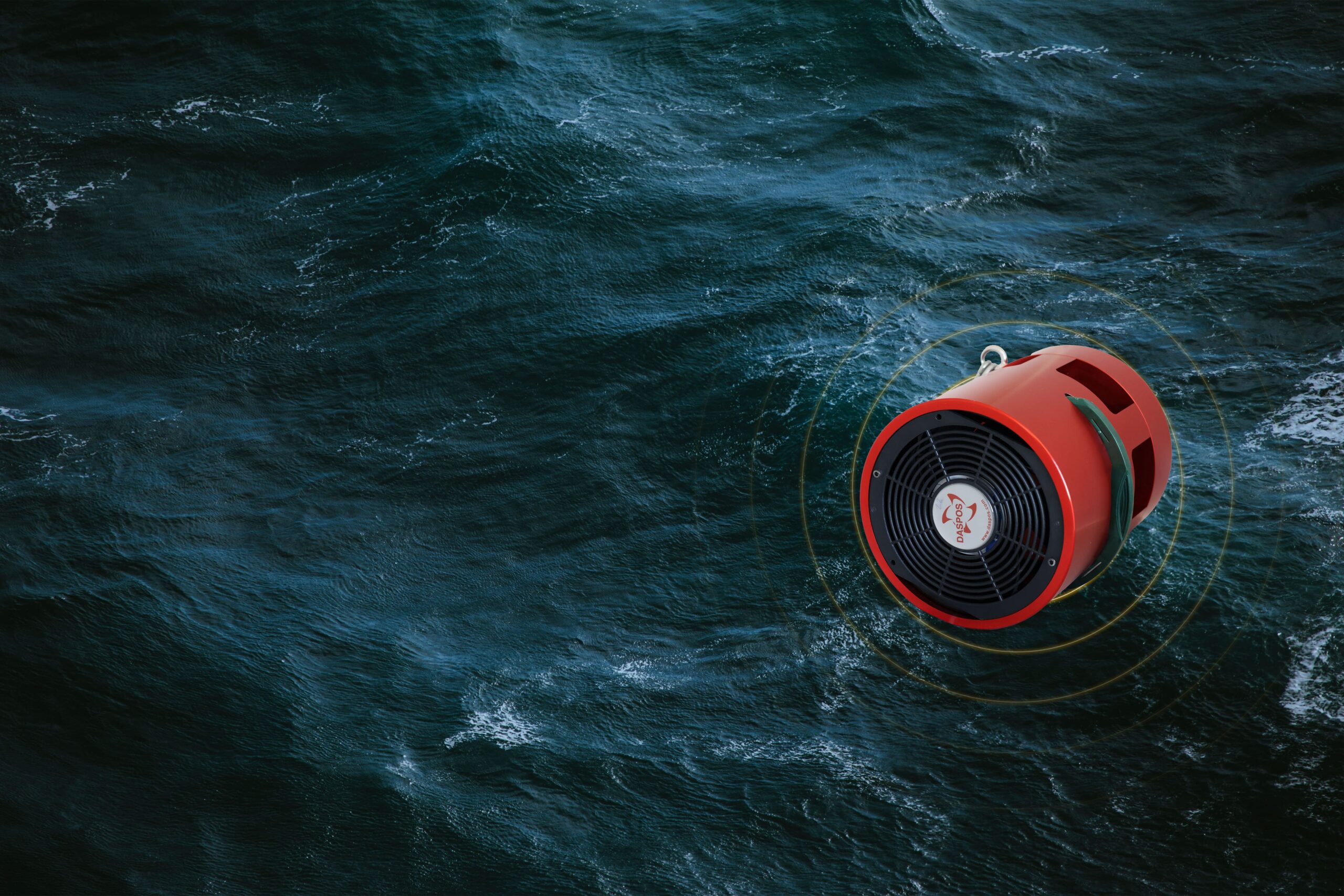
In the marine industry, fire safety has long been about reacting quickly. Detect the smoke. Trigger the alarm. Activate suppression systems. But what if the real opportunity is not responding faster, but preventing the fire from happening in the first place? That is where oil mist detection is making a real difference.
The engine room is one of the most critical spaces on board a vessel. It keeps operations running, but it is also one of the most vulnerable environments when it comes to fire risk. High temperatures, pressurised systems, and flammable liquids exist side by side, creating the conditions for incidents to escalate quickly.
In fact, two out of three fires onboard ships start in the engine room, most often caused by failures in the fuel system followed by oil coming into contact with hot surfaces.
When a fire occurs, it develops rapidly and can have serious consequences for both crew safety and operations.
Traditional fire detection systems are designed to react once a fire has already started. By the time smoke or heat is detected, the situation has already escalated.
Oil mist detection takes a different approach.
Instead of waiting for combustion, systems like DASPOS continuously monitor the air in the engine room, identifying oil mist, gas leaks and fuel vapours before they reach ignition. By detecting these early warning signs, the system makes it possible to act before a fire starts.
This shift from reaction to prevention is at the core of our oil mist detection technology.
Using high-volume airflow, up to 10,000 litres of air per minute can be analysed to detect even small changes in airborne particles.
By combining oil mist detection with gas sensing, the system can determine whether substances in the air have flammable characteristics and trigger an early warning.
This provides valuable time to investigate and address the issue before it escalates into a serious incident.
For ship owners and operators, the impact of prevention is significant.
Engine room fires are not only dangerous, they are also extremely costly. In high-stakes environments such as cruise ships, the cost of a fire can exceed 200,000 dollars per minute due to damage and operational downtime.
Preventing even a single incident can therefore make a substantial difference, both in terms of safety and financial outcome.
DASPOS oil mist detection systems are designed specifically for these environments. A high-capacity fan continuously draws in large volumes of air from across the engine room, reducing the need for multiple detectors while ensuring full and reliable coverage.
At the same time, the system is built for practical use, with seamless integration into existing fire detection systems and minimal maintenance requirements.
The result is a solution that supports both safety and operational efficiency.
There is a clear shift taking place in marine safety. From focusing on how to respond to fires, to understanding how to prevent them before they start.
This shift is also reflected in how standards are evolving across the industry. While the MSC/Circ.1086 code of practice itself is not a mandatory regulation, it is widely recognised as the global benchmark for performance and approval. The latest revision, approved in 2025, reflects the industry’s growing focus on prevention, with enhanced expectations for detection sensitivity, response time and system reliability.
For ship owners and operators, this means greater confidence that modern oil mist detection solutions are not only compliant, but designed to meet the highest standards of safety and operational performance.
Oil mist detection plays a key role in that shift, giving operators the ability to identify risks early and act in time. Because in the end, the most effective way to deal with a fire is to make sure it never starts. Read more here.